
Control or power response
A silent system can call for a different assessment from one where another remote or wall control works. Report an outage, a visible lock indication, or a control that stopped responding. [2]

Garage Door Knowledge Center
Start with the symptom, understand the possible service paths, and choose the next step with confidence.
Published by Trinitron Garage Doors · Meet owner Wesley Zietz
Manufacturer references and photo credits are listed in this guide.
A homeowner’s guide
“It won’t work” can describe several different situations: silence, a motor sound without movement, a door that stops partway, or a door that reverses during closing.
Those details help Wesley ask better questions. You do not need to decide whether to buy a spring, sensor or opener before requesting help.
If the door is crooked, straining, damaged, or has a loose cable or suspected broken spring, stop operating it. Do not pull the emergency release or test its weight. Keep clear and call for help.
Recognize the situation
Use what you already observed. A damaged door should not be operated again to complete a checklist.
Tell us which control you used, whether anything lit up, and whether the issue followed an outage.
Describe a click, hum or running sound, and whether the door moved at all before stopping.
Note the direction and approximate stopping point, along with any visible obstruction or unevenness.
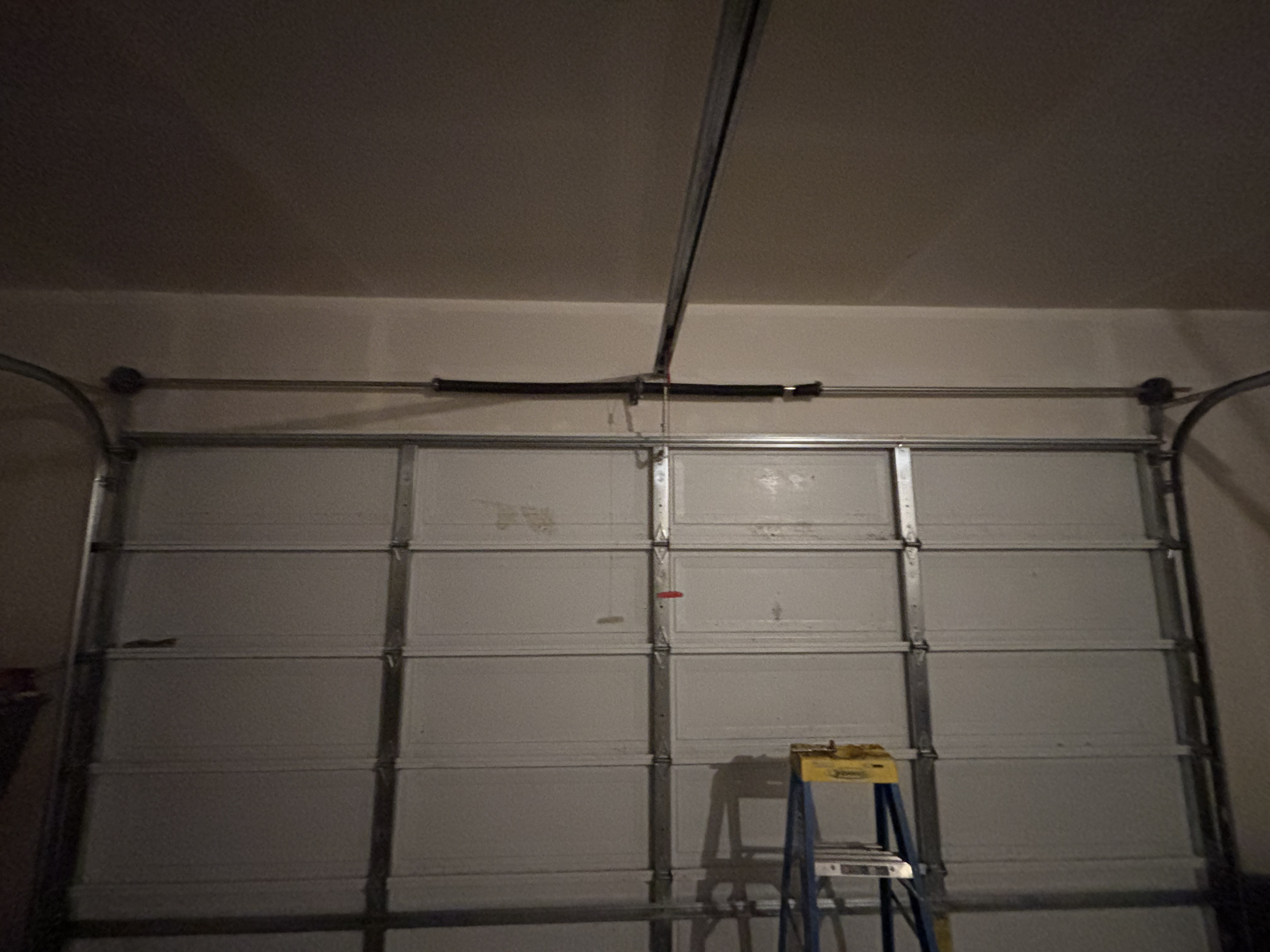
A closer look
An opener relies on a serviceable, correctly balanced door. A new motor is not the answer to every movement problem. The mechanical door and the control system need to be considered together. [1]
The example photo shows layout only. A closed door can still need assessment before operation.
Understand the system
Manufacturer troubleshooting separates the electrical or control response from the mechanism that moves the door.
A silent system can call for a different assessment from one where another remote or wall control works. Report an outage, a visible lock indication, or a control that stopped responding. [2]
A running opener with a stationary door can involve the connection or drive system. A stopping or reversing door raises other questions. These patterns are starting points for inspection, not a parts order. [2]
Make an informed choice
For example: “The door is closed. The wall button makes a click, but it will not lift. This started after a loud bang this morning, and my car is inside.” That is enough to begin the conversation.
Add the opener model if you already have it, approximate door size, your city, and a safe wide photo. If you do not know whether the sound came from a spring or motor, leave that question open.
From information to action
Choose the description that fits your observation or use the diagnosis hub.
Request an estimate when the cause is uncertain. Review a known repair in the Wizard.
Ask the technician to explain the fault and scope before replacement parts are approved.
Use the Repair Wizard for the currently listed services, review your quote, and continue to booking. If the cause is uncertain, request an estimate from Wesley.
Compare what you noticed
Use observations you already have. Do not operate a damaged or straining door to fill in this table.
| What you noticed | What it can point toward |
|---|---|
| A normal press of the wall control works, but one remote does not | The remote battery, programming or remote itself may need attention. Read about remotes and controls. |
| The door closes only while you hold the wired wall button | Some models permit temporary constant-pressure closing when the safety-eye system prevents normal operation. This differs from a normal button press. Read the sensor guide and model-specific precautions. |
| The motor runs, but the door stays still | The trolley connection or drive components may be involved; the relevant parts depend on the opener design. Understand opener problems. |
| The door starts closing and reverses | Sensor problems and mechanical binding are among the possibilities. Read the safety-sensor guide. |
| There is a visible break in a spring | Stop using the door and arrange professional spring service. See the spring guide and photo examples. |
References: Genie troubleshooting by symptom and DASMA garage door safety. Model-specific instructions govern; this comparison cannot confirm a diagnosis.
From our customer stories
These projects show two different reasons a door may need service: alignment trouble and wear in the opener and door hardware.
James reported that the door worked well afterward and that Wesley explained the work.
The project notes record improved movement. Sumit’s review highlights the upfront pricing, attention to detail and clear explanation.
Summaries use the work descriptions and customer feedback on the linked project pages. Each job has its own scope; your repair and price may differ.
Quick answers
Stop if it strains, behaves abnormally or shows damage. Repeated commands do not identify the cause and can put more load on a compromised system.
An illuminated light is only one observation. Tell us whether the control produced a click, motor sound or any door movement.
That is one possibility when a single remote stops working. It does not explain every no-movement symptom; see the opener and controls guide for model-specific next steps.
Describe the closing sequence and any visible sensor indicators. Use the safety-sensor guide to understand the checks, and do not defeat the sensors to force closure.
Yes. Describe the symptom to Wesley or use the diagnosis hub. You do not have to choose a replacement before asking for help.
Read the source material
These primary references support the technical explanations. Use the instructions for your exact door and opener when a procedure or product requirement depends on the model.
Help from Trinitron Garage Doors
Work with a local, veteran-owned garage door business serving Puget Sound. Review your repair options online or talk them through with Wesley.