
Friction and routine care
Lubrication can be appropriate for specified components on a sound system. Clopay distinguishes this from wear, track issues and opener faults that can also make noise. [1]

Garage Door Knowledge Center
Describe the sound, connect it with the movement, and understand what the inspection should check.
Published by Trinitron Garage Doors · Meet owner Wesley Zietz
Manufacturer references and photo credits are listed in this guide.
A homeowner’s guide
A squeak, scrape and sudden bang can lead to different questions. Notice whether the sound came with uneven travel, hesitation or a visible change in the hardware.
You can give a useful description without naming a part: “It scraped near the left side, then stopped halfway” helps explain the sequence.
Stop using a door that bounces, binds, sits crooked or strains, especially with a loose cable or suspected broken spring. Do not reach into rollers, pulleys or hinges to locate the sound.
Recognize the situation
These examples organize the conversation; they do not diagnose a component from sound alone.
Tell us where it seemed loudest and whether it developed gradually. Normal care and worn components are different possibilities.
Mention whether the noise came from a side track, the top of the door or the opener, and any accompanying movement change.
Describe a single sudden event separately from a repeated sound. Include anything that happened immediately afterward.
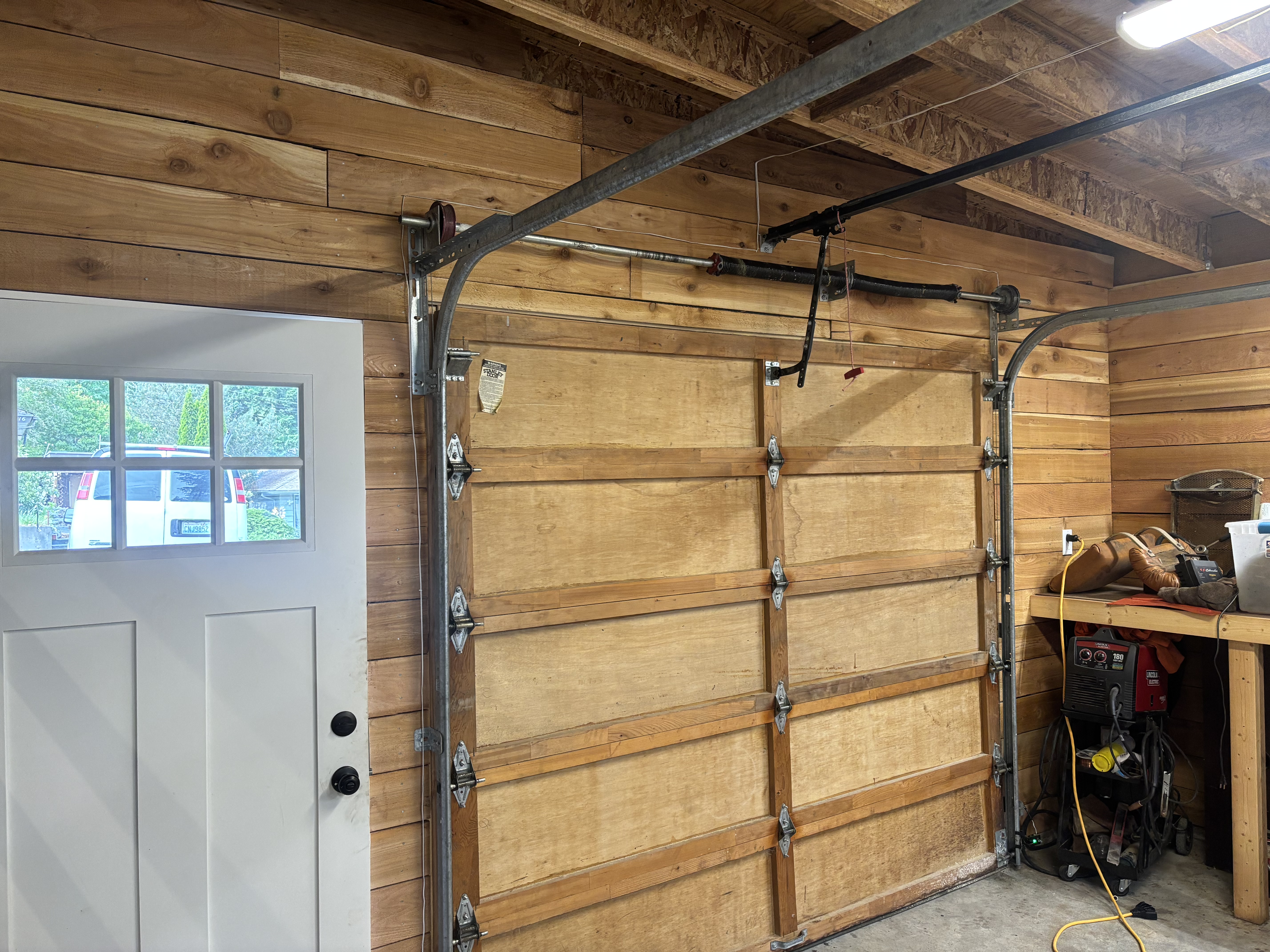
A closer look
This view shows how many moving components surround the door. A noise that seems to come from above can still need the door hardware and the opener assessed together.
Use observations you already have. Do not repeat an abnormal movement to record a sound.
Understand the system
A good inspection connects the reported symptom with something the technician can explain.
Lubrication can be appropriate for specified components on a sound system. Clopay distinguishes this from wear, track issues and opener faults that can also make noise. [1]
Ask about rollers, hinges, tracks and bearings. On an extension-spring door, include the pulleys and cable route in the discussion. Describe any visible wear without handling the parts.
Make an informed choice
Ask the technician to identify the condition behind the recommendation: a worn roller, a damaged hinge, an opener component, or another issue. Have the required repair separated from optional noise upgrades.
A part advertised as quiet must still match the door’s requirements. Appearance alone cannot establish equivalent strength or performance. Ask why the proposed replacement is suitable for your system. [2]
From information to action
Give the location, timing and movement that accompanied the noise.
Ask what wear or fault was found and whether maintenance or replacement is appropriate.
Clarify the expected improvement and any remaining issue that needs separate work.
Use the Repair Wizard for the currently listed services, review your quote, and continue to booking. If the cause is uncertain, request an estimate from Wesley.
From our customer stories
These projects give concrete examples of worn or damaged moving parts that inspection brought to light.
Laurence reported a substantial improvement in how the door ran and appreciated the explanation of the problem.
Jeffrey’s review says the work was completed professionally in under an hour.
Summaries use the work descriptions and customer feedback on the linked project pages. Each job has its own scope; your repair and price may differ.
Quick answers
No. A squeak alone does not establish a broken spring. Report any bang, visible separation or change in movement as well. [4]
Clopay recommends cleaning the track surfaces rather than lubricating them. Follow your own door’s manual for the exact care requirements. [3]
Selection depends on the door and roller specification. Ask about suitability, bearing design, stem length and the written scope; do not choose solely by the word “quiet.”
Arrange an inspection. Include pulleys on an extension system, visible roller wear, springs and any loose cable in the symptom discussion; a hidden issue may remain.
An existing recording can help, but it is not required. Do not operate a damaged or abnormal door again just to make one.
Read the source material
These primary references support the technical explanations. Use the instructions for your exact door and opener when a procedure or product requirement depends on the model.
Help from Trinitron Garage Doors
Work with a local, veteran-owned garage door business serving Puget Sound. Review your repair options online or talk them through with Wesley.