
Non-insulated or exposed-back options
Single-layer steel doors and insulated doors with an exposed or vinyl-backed interior offer different construction. Ask which product is being quoted and what its inside face looks like. [1]

Garage Door Knowledge Center
Compare construction, comfort, appearance and installation details before choosing your next garage door.
Published by Trinitron Garage Doors · Meet owner Wesley Zietz
Manufacturer references and photo credits are listed in this guide.
A homeowner’s guide
Parking, storage, a workshop and a room beneath a bedroom can create different priorities. Decide how much appearance, daylight, interior finish and comfort matter before comparing model names.
Keep the product specification with each quote. Two doors with a similar front panel pattern may have different construction and included work.
Have the installer verify the opening and available clearances before ordering. Do not add insulation, decorative material or other weight to an existing door without manufacturer guidance.
Recognize the situation
Rank the choices that will affect how the garage feels and functions day to day.
Choose the panel style, color and window layout you want to see from the street.
Consider whether the garage is mainly storage or somewhere you spend regular time.
Compare the equipment and work included, not just the price of the door sections.
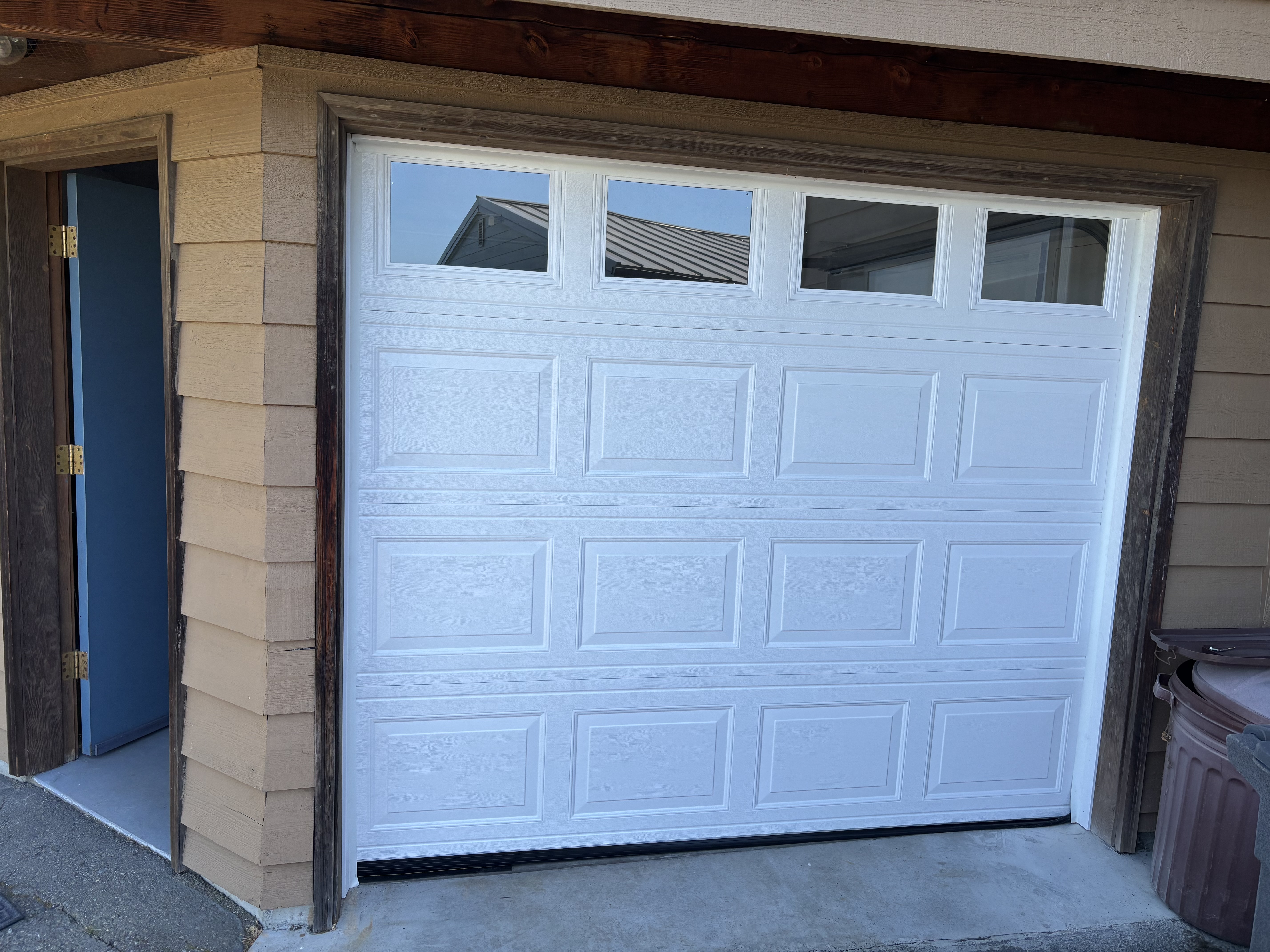
A closer look
This example shows exterior style and glazing, but the photograph alone does not establish insulation, steel thickness or warranty. Those details should be written into the proposal.
Ask to see the inside face as well as the front when comparing construction options.
Understand the system
Ask for the number of layers and the interior finish, then confirm the exact manufacturer and model.
Single-layer steel doors and insulated doors with an exposed or vinyl-backed interior offer different construction. Ask which product is being quoted and what its inside face looks like. [1]
A three-layer option combines an exterior skin, an insulating core and an interior steel skin. Compare the full model specification rather than assuming every steel-back door has the same rating. [1]
Make an informed choice
For the stated section, a higher R-value indicates more thermal resistance. A lower tested U-factor indicates less heat transfer through the complete door assembly. Do not treat a section R-value as the tested performance of the entire installed door. [2]
Ask whether comparable whole-door test information is available, including any applicable DASMA verification. Your comfort also depends on the rest of the garage and how it is used, so avoid assuming a door rating guarantees a particular room temperature. [3]
From information to action
Use the Door Designer to explore the currently available choices and pricing.
Review measurements, nearby obstructions, track needs and the final product specification.
Keep the installed scope, preparation requirements and warranty with your order.
Use the Door Designer to compare the available options, then confirm measurements and installation details with Wesley.
From our customer stories
Size, windows, insulation and overhead space all appear in the projects below. Each story describes choices made for a particular opening.
Gerry’s review describes the change in appearance and says the work matched the agreed plan.
Daren’s review says the new door improved the home’s appearance and helped complete the renovation.
The customer’s review emphasizes that Wesley assessed the space and explained the proposed system before the installation.
Summaries use the work descriptions and customer feedback on the linked project pages. Each job has its own scope; your repair and price may differ.
Quick answers
It depends on your priorities and the model. Compare construction, interior finish, thermal information, warranty and installed cost against the way you use the garage.
Only when you are comparing the same kind of rating. Section R-values and tested assembly U-factors represent different measurements. [2]
Discuss the manufacturer’s requirements before changing the assembly. Added material can change the weight and affect the counterbalance system. [5]
Space above, beside and behind the opening affects the track and opener arrangement. Ask the installer to verify clearances and nearby obstructions. [4]
Request an assessment of the current door and compare the full scopes. If repair meets your needs, use the Repair Wizard below; for a new door, begin with the Door Designer.
Read the source material
These primary references support the technical explanations. Use the instructions for your exact door and opener when a procedure or product requirement depends on the model.
Help from Trinitron Garage Doors
Work with a local, veteran-owned garage door business serving Puget Sound. Compare repair options in the Wizard, or talk through replacement with Wesley.